In prototype development
MESA MK1 — Environmental Intelligence for Your Landscape
Taking the Guesswork Out of Gardening.
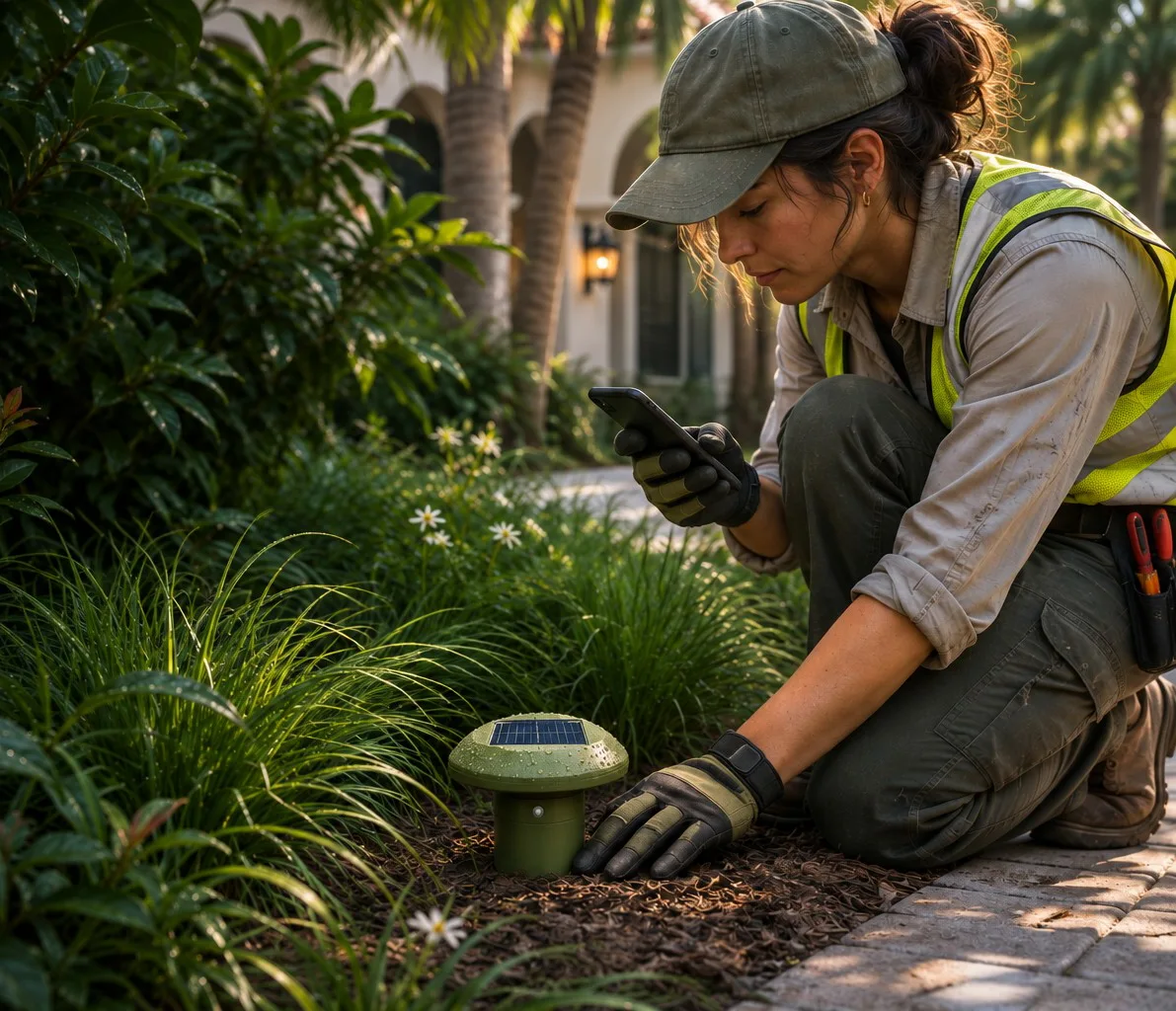
MESA MK1 is an environmental monitoring system being developed by Terra Preta LLC. Designed to help homeowners and land managers better understand the soil beneath their landscapes, MESA combines ongoing measurements, historical trends, and plant-specific guidance into one easy-to-understand experience.
Interested in MESA? Get in Touch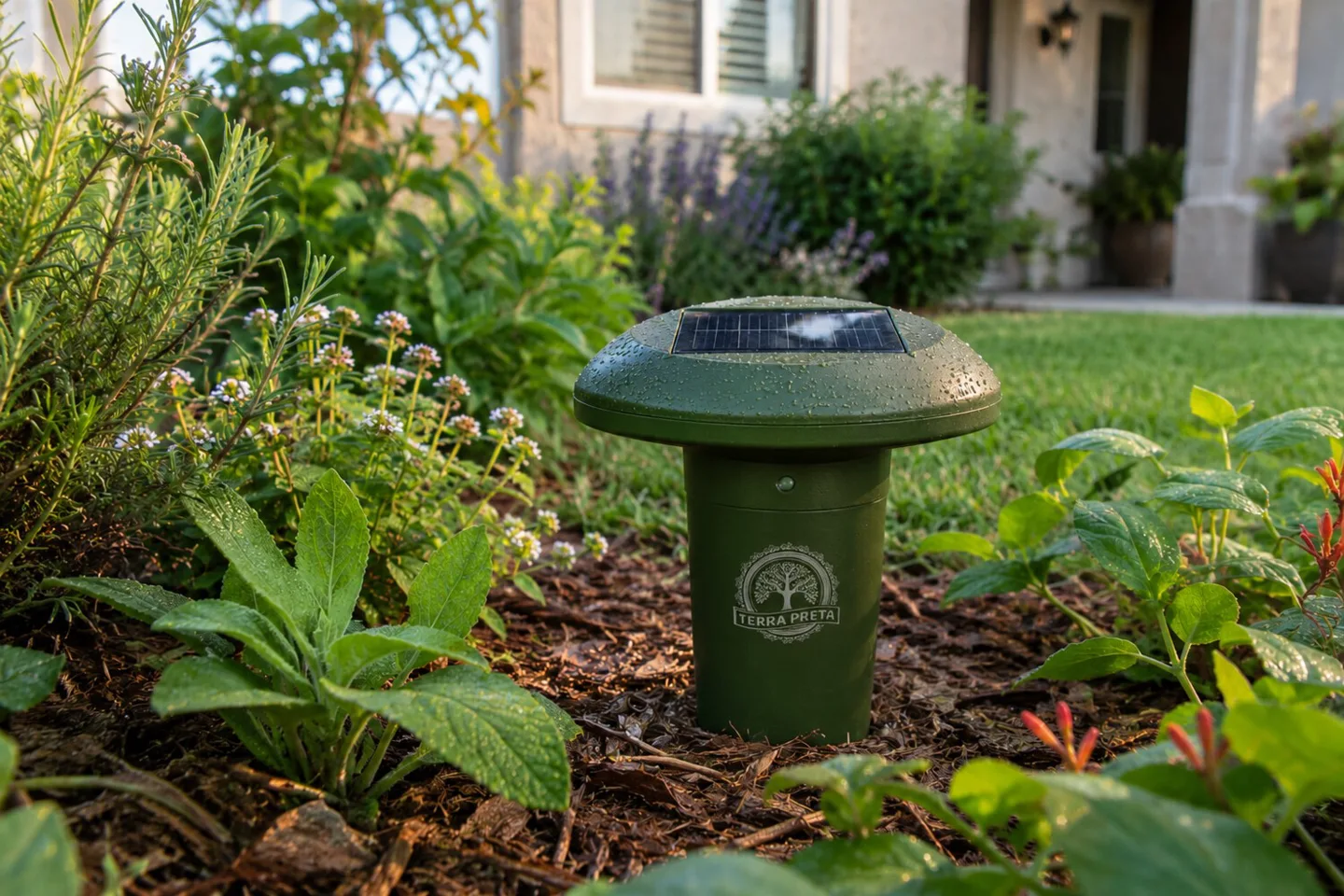
Understand What's Happening Beneath the Surface
A lab soil test gives you a useful snapshot of your soil. Between tests, a hot week, heavy rain, or a change in watering can affect what’s happening around the roots. Terra Preta is developing this garden soil sensor to help you see those changes as they happen and decide when to take a closer look.
Explore Terra Preta’s soil testing service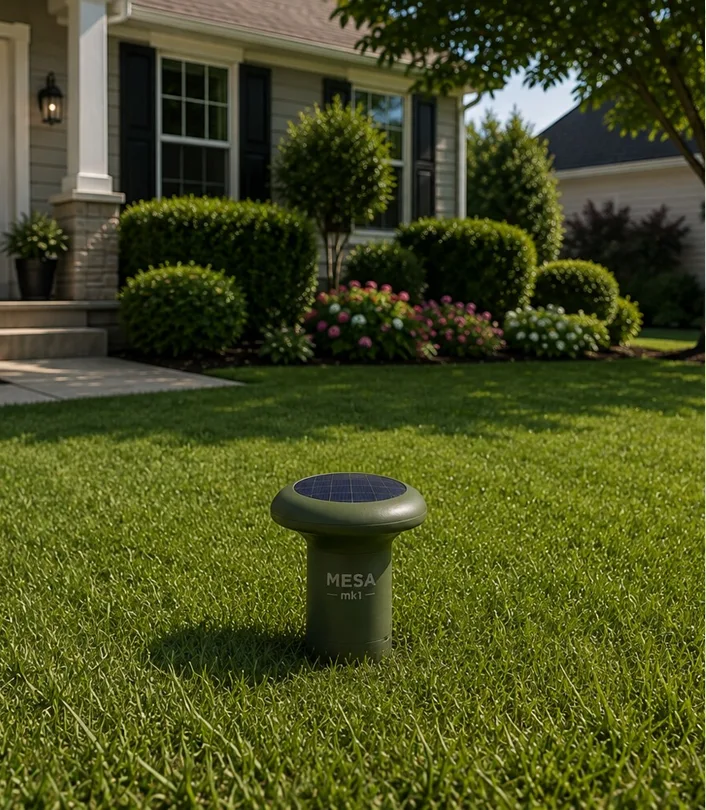
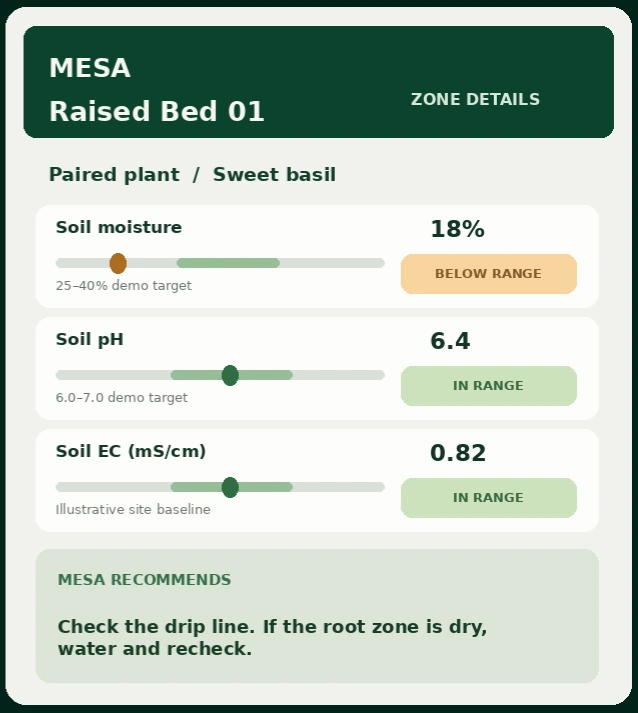
Is This Bed in Range for Sweet Basil?
MESA is being designed to compare readings in each zone with target ranges for the plant you select. The sweet basil example shows how the app could flag low moisture and suggest checking the drip line and root zone.
- Soil moisture
- Soil pH
- Electrical conductivity (EC)
- Soil temperature
- Experimental nitrogen, phosphorus, and potassium (NPK) indicators
- Comparisons with selected plant ranges
- Alerts and suggestions for what to inspect
Your Yard Is a Dynamic System
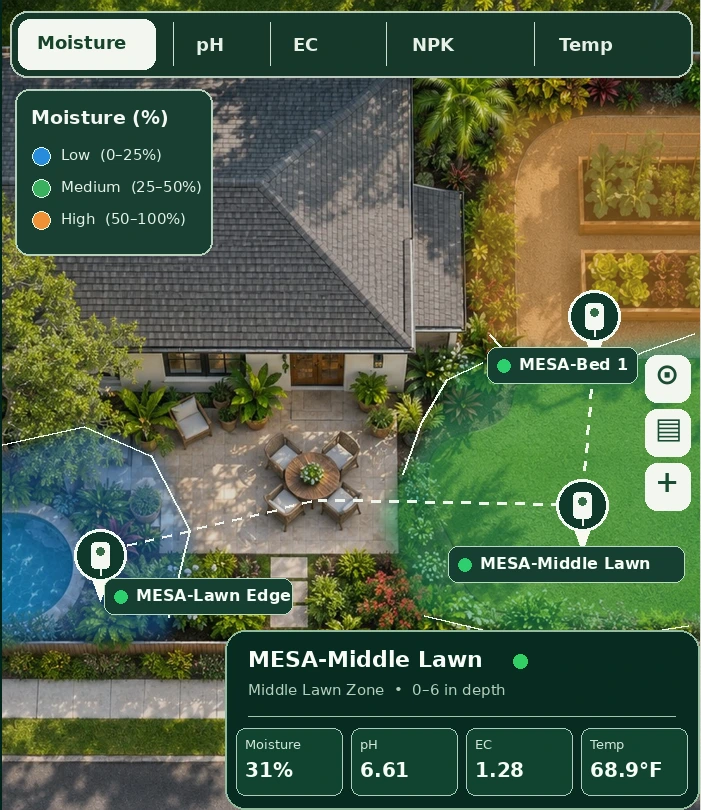
A lawn in full sun can dry out while a shaded garden bed stays damp. MESA is being designed to help you compare lawns, gardens, and other managed areas across a property and see how each zone changes over time.
Connecting multiple devices in one property view is a planned capability.
See How Your Soil Changes Over Time
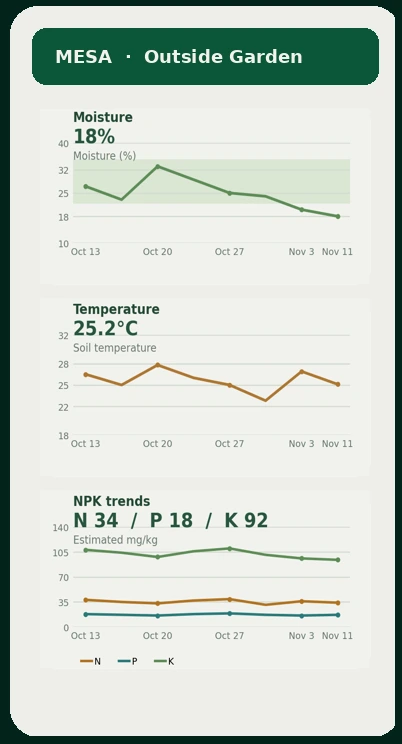
Readings recorded over time could show how quickly a bed dries after rain or how soil temperature shifts through the week. The dashboard is designed to make it easier to compare changes in moisture, temperature, and experimental NPK indicators with selected plant targets.
You Set the Plants. MESA Interprets.
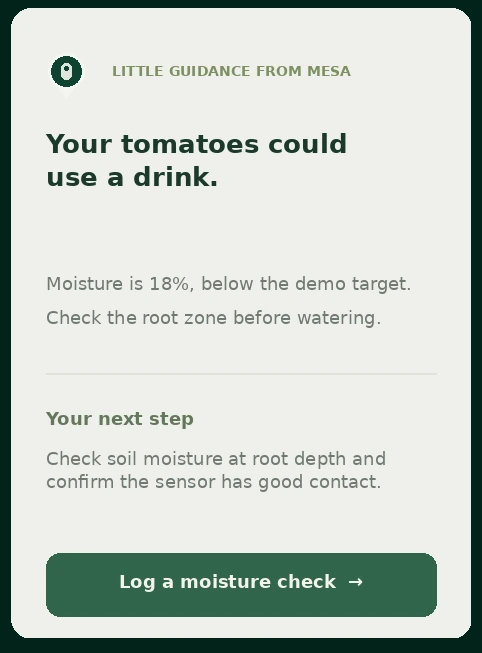
MESA is being developed to do more than display numbers. By comparing measurements with selected plant profiles and observing changes over time, the system aims to help users understand what needs attention and identify practical next steps.
- Assign a plant or landscape profile.
- Monitor readings and historical trends.
- Identify conditions outside selected ranges.
- Receive guidance about what to inspect.
- Track future readings after taking action.
From Field Data to Intelligent Recommendations
MESA is in prototype development. These stages describe the work needed to move from repeatable measurements to recommendations evaluated under field conditions.
Prototype
Establish repeatable sensor measurements and Bluetooth communication.
Hardware and Network
Develop and test enclosure durability, battery power, solar charging, and connectivity.
Field Validation
Collect measurements in varied environments and pair readings with photographs and plant-health observations.
Recommendation Development
Use validated data and plant profiles to develop and evaluate useful recommendations.
Interested in Helping Develop MESA?
Terra Preta is interested in discussing field validation with homeowners, nurseries, farms, landscaping businesses, property managers, and others who care for suitable managed or natural landscapes. A range of conditions, including rain-fed sites, can help us study how readings change over time.
Tell us about your site and what you’d like to learn from it.
Interested in MESA? Get in Touch